How to Get Insurance to Pay for Your Roof Replacement: Step-by-Step Guide
Key Takeaways
- Homeowners’ insurance often covers roof replacement caused by storms, hail, or wind damage
- Acting quickly after damage occurs improves the chances of claim approval
- Clear documentation strengthens an insurance claim
- A professional roof inspection can reveal damage that insurance companies need to see
- Working with a trusted roofing contractor can make the claim process easier
Roof damage can happen suddenly, especially after strong storms, hail, or heavy winds. Many homeowners know their insurance may help cover the cost of repairs, but the process of getting approval can feel confusing and stressful.
The good news is that homeowners’ insurance often covers roof replacement when the damage comes from a covered event.
Understanding the steps involved can make the process smoother and help you avoid delays or claim denials. This guide explains how to get your insurance to cover your roof replacement and what homeowners should expect during the roof insurance claim process.
Understanding When Insurance Covers Roof Replacement
Homeowners insurance is designed to protect against sudden and unexpected damage. Roof replacement is often covered when the damage is caused by events outside the homeowner’s control.
Common situations that insurance may cover include:
- Hail damage
- Wind damage from severe storms
- Fallen tree branches
- Fire damage
- Storm-related debris
However, insurance companies usually do not cover roof damage caused by normal wear and tear or lack of maintenance. If a roof has simply reached the end of its lifespan, the replacement cost is often the homeowner’s responsibility.
This is why proper inspections and clear documentation are important when filing a claim.
Step 1: Check Your Homeowners Insurance Policy
Before starting a claim, it is helpful to review your insurance policy. This helps you understand what type of roof coverage your plan provides.
Important things to look for include:
Replacement Cost vs Actual Cash Value
Replacement cost coverage may pay for the full cost of replacing the roof, minus the deductible.
Actual cash value coverage may only pay the current value of the roof after depreciation, which can reduce the payout.
Deductible Amount
The deductible is the portion the homeowner pays before insurance coverage begins.
Coverage Limits
Your policy may include limits on how much it will pay for roof damage.
Filing Deadlines
Insurance companies usually require claims to be filed within a specific timeframe after damage occurs.
Knowing these details helps homeowners prepare before contacting the insurance company.
Step 2: Look for Signs of Roof Damage
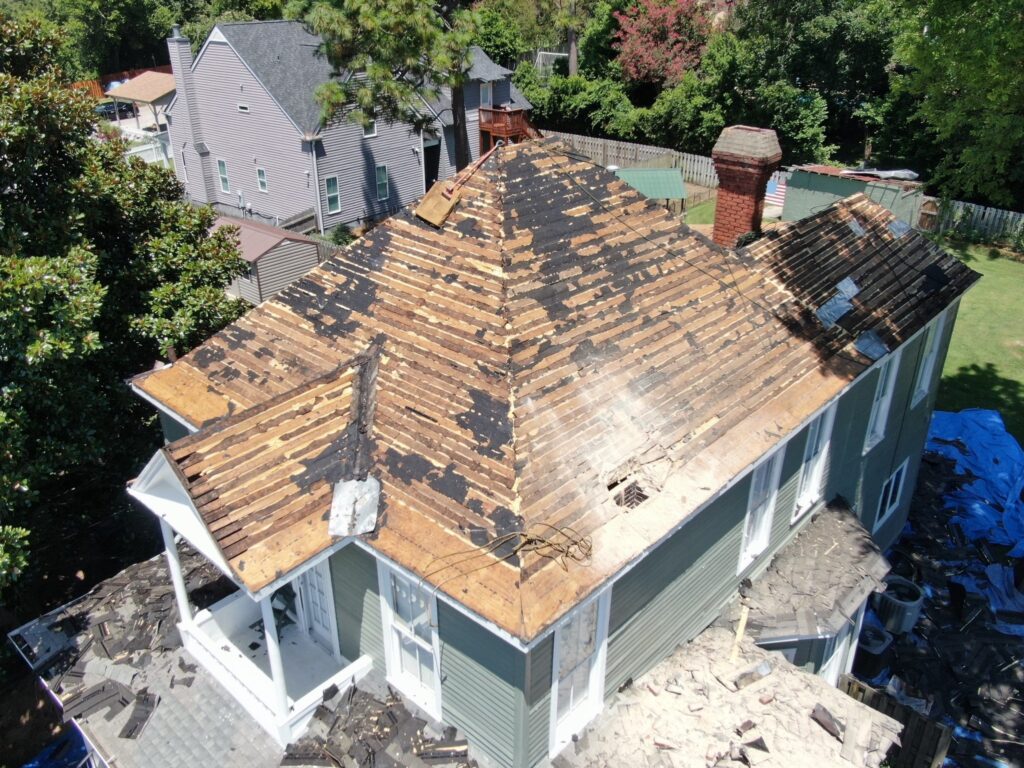
After a strong storm, it is important to check for signs of roof damage. Some issues may be visible from the ground, while others require a closer inspection.
Common warning signs include:
- Missing or loose shingles
- Shingles that appear cracked or lifted
- Dents from hail impact
- Water stains on ceilings or walls
- Shingle granules are collecting in gutters
- Leaks inside the home
Even small damage can lead to bigger problems if it is not addressed quickly. If you notice any of these signs, scheduling a professional roof inspection is the next step.
Step 3: Document the Damage
Strong documentation plays an important role in the insurance claim process. The more evidence you provide, the easier it is for insurance companies to evaluate the damage.
Helpful documentation may include:
- Photos of roof damage
- Photos of interior water damage
- The date the storm occurred
- Local weather reports
- Inspection reports from roofing professionals
Clear records help demonstrate that the damage was caused by a covered event.
Step 4: Schedule a Professional Roof Inspection
A professional roof inspection helps confirm whether the damage qualifies for an insurance claim, especially when you understand what to expect during your free roof inspection.
Experienced roofing contractors can identify problems that homeowners may not notice, including hidden storm damage.
A detailed inspection often includes:
- Checking shingles and roofing materials
- Identifying hail or wind damage
- Inspecting flashing and roof components
- Reviewing attic areas for water intrusion
- Providing a written inspection report
This report can serve as valuable documentation when submitting an insurance claim.
Step 5: File the Insurance Claim
Once the damage is confirmed, the next step is to contact your insurance company to begin the claim process.
The typical steps include:
- Contact your insurance provider
- Explain the storm damage or issue
- Submit documentation and inspection reports
- Schedule an adjuster inspection
Insurance companies will open a claim and review the information provided.
Filing the claim quickly is important, since many policies require claims to be submitted within a limited timeframe after the damage occurs.
Step 6: Meet the Insurance Adjuster
After the claim is filed, the insurance company will send an adjuster to inspect the roof. The adjuster’s role is to determine the cause of the damage and estimate repair costs.
During the inspection, the adjuster may:
- Examine shingles and roofing materials
- Check for storm-related damage
- Inspect areas where leaks occurred
- Review the documentation submitted with the claim
Having a roofing contractor present during this inspection can help ensure damage is clearly identified and properly documented.
Step 7: Review the Insurance Settlement
Once the inspection is complete, the insurance company will review the findings and determine whether the claim is approved.
If the claim is approved, the settlement details may include:
- The estimated cost of repairs or replacement
- The homeowner’s deductible
- Any depreciation applied to the roof value
- Payment timelines
Homeowners should review the settlement carefully to understand what is covered and what costs may still apply.
Common Reasons Roof Claims Get Denied
Insurance claims may be denied if the damage does not meet policy requirements.
Some common reasons include:
- Damage caused by aging or normal wear
- Lack of roof maintenance
- Missing documentation
- Claims filed too late after the damage occurred
Understanding these risks can help homeowners avoid mistakes that could affect claim approval.
How a Roofing Contractor Can Help With Insurance Claims
Roofing contractors often play an important role in the insurance claim process. Their experience with storm damage and inspections helps homeowners navigate the process more confidently.
Professional roofing contractors may assist by:
- Performing detailed roof inspections
- Documenting storm damage
- Providing accurate repair estimates
- Answering questions during adjuster inspections
- Helping homeowners understand the repair process
This support can reduce confusion and help ensure the damage is properly evaluated.
Conclusion
Roof damage can be overwhelming, especially after a severe storm. Understanding how the insurance claim process works can help homeowners move forward with confidence.
By reviewing your insurance policy, documenting the damage, and working with experienced roofing professionals, you can increase the likelihood of getting your roof replacement approved.
Taking the right steps early can protect your home and prevent further damage.
If you suspect your roof has storm damage, schedule a free roof inspection with Armour Roofing. Our team will assess your roof, document any damage, and help guide you through the insurance claim process so you can protect your home with confidence.
FAQ
Will homeowners’ insurance pay for a new roof?
Homeowners’ insurance may cover a new roof when damage is caused by covered events such as hail, wind, or falling debris.
What type of roof damage is covered by insurance?
Insurance commonly covers damage from storms, hail, wind, fire, and sudden accidents that affect the roof structure.
How long do I have to file a roof insurance claim?
The timeframe varies depending on the insurance provider and policy. Many companies require claims to be submitted within months of the damage event.
Can a roofing contractor help with an insurance claim?
Yes. Roofing contractors can inspect damage, document issues, and help explain repair needs during the insurance process.
What happens if my roof claim is denied?
Homeowners may review the denial with their insurance company, provide additional documentation, or request another inspection.